The Major Turning Points in Anglo-Saxon England
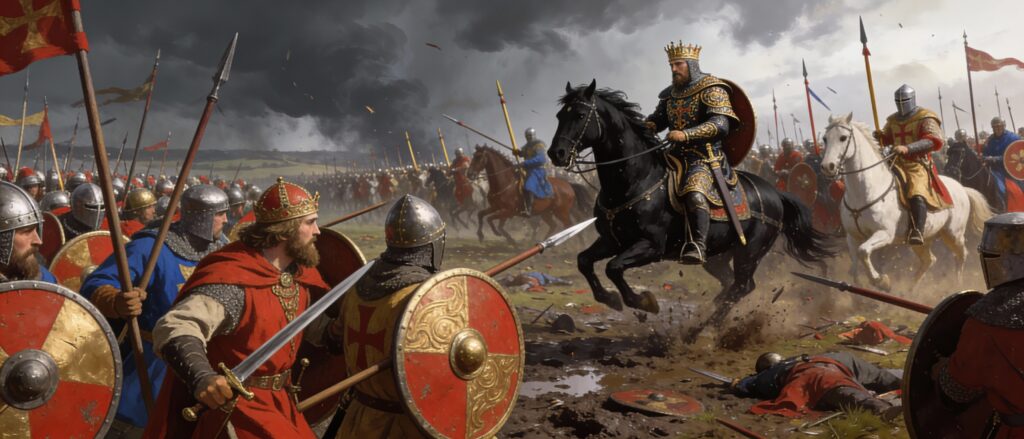
For over half a millennium, from roughly 410 to 1066, Anglo-Saxon England underwent a dramatic transformation. What began as scattered Germanic tribes fighting for survival evolved into a unified kingdom, shaped by Christianity, tested by Viking raids, and ultimately reshaped by Norman invaders. Understanding the key periods of this era is essential to grasping how modern England was born.
The Early Settlers: When the Romans Left (410–600)
When Roman legions withdrew from Britain around 410, they left behind a power vacuum that Germanic peoples would fill. The Angles, Saxons, and Jutes, groups from what is now Denmark, Germany, and the Netherlands, began arriving not as a coordinated invasion, but gradually, often first serving as hired mercenaries defending remaining British territories.
By the late 5th and 6th centuries, these settlers had established themselves across eastern and southern Britain. Rather than a single takeover, it was a slow-motion colonisation marked by conflict, negotiation, and land acquisition. Some accounts mention legendary figures like King Arthur as resistance leaders, though historians debate whether Arthur ever existed. What’s clear is that by around 600, Britons were retreating westward, and Germanic settlement had become the dominant reality across lowland Britain.
Seven Kingdoms Rise: The Age of Competition (600–793)
By the 7th century, the picture had shifted. Instead of scattered settlements, a recognisable political structure emerged: seven major kingdoms competing for dominance. These became known as the Heptarchy (Northumbria, Mercia, East Anglia, Kent, Essex, Sussex, and Wessex).
This wasn’t peaceful coexistence. Kings fought constantly, expanding territory or defending it. Mercia, centred in the Midlands, became particularly powerful during this period, dominating its rivals through military strength. The borders between these kingdoms shifted regularly based on who won the latest conflict.
The arrival of Augustine of Canterbury in 597 marked a turning point. Christianity spread from Kent through the kingdoms, transforming the religious landscape within a generation. Monasteries became centres of learning and art. The Venerable Bede, writing in Northumbria, produced his “Ecclesiastical History,” one of the most important sources we have for this entire era. Where once there had been pagan kingdoms struggling for survival, there were now Christian kingdoms with monks producing manuscripts and preserving knowledge.
The Viking Challenge: When Raiders Became Rulers (793–878)
Everything changed in 793. A Viking raid on Lindisfarne monastery shocked the Anglo-Saxon kingdoms and marked the beginning of a new threat. These weren’t the first Scandinavian attackers, but they were the first serious invasion force.
By 865, a massive force known as the “Great Heathen Army” arrived, and this was different. Rather than raiding and leaving, Vikings began conquering and staying. Over the next couple of decades, they overran Northumbria, East Anglia, and much of Mercia, establishing themselves in what would become known as the Danelaw, the region of eastern England where Danish law and settlement predominated.
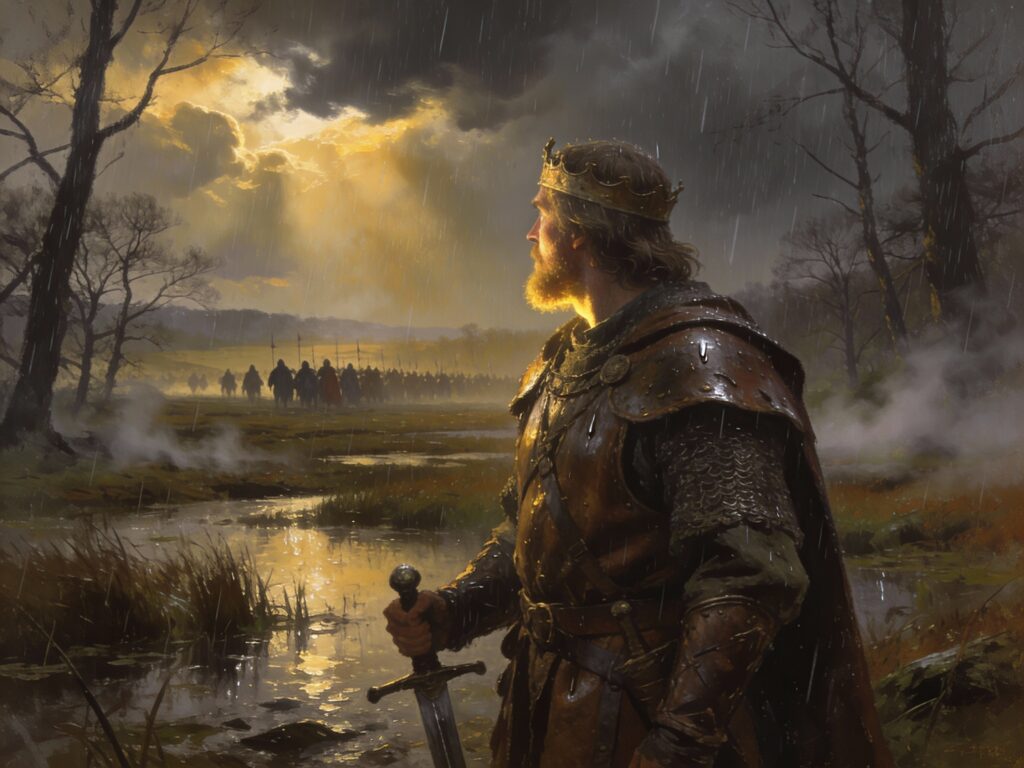
By the 870s, only Wessex remained as an independent Anglo-Saxon kingdom. This is where King Alfred the Great stepped into history. In 878, after being pushed into the marshes of Somerset, Alfred rallied his forces and defeated the Danes at Edington, securing Wessex’s independence and buying time for negotiation. The Treaty of Wedmore that followed recognised the Danelaw and granted Wessex breathing room.
What Alfred did during his remaining years was just as important as his military victories. He reorganised his kingdom’s defences, promoted education and literacy, and established Winchester as a major administrative centre. The Anglo-Saxon Chronicle, the primary written record of this era, was actually compiled under his direction.
Conquest and Unification: From Survival to Empire (878–975)
After Alfred’s death in 899, his son Edward the Elder continued the work of expansion. Over the early 900s, he gradually conquered the Danelaw, bringing those territories back under West Saxon rule.
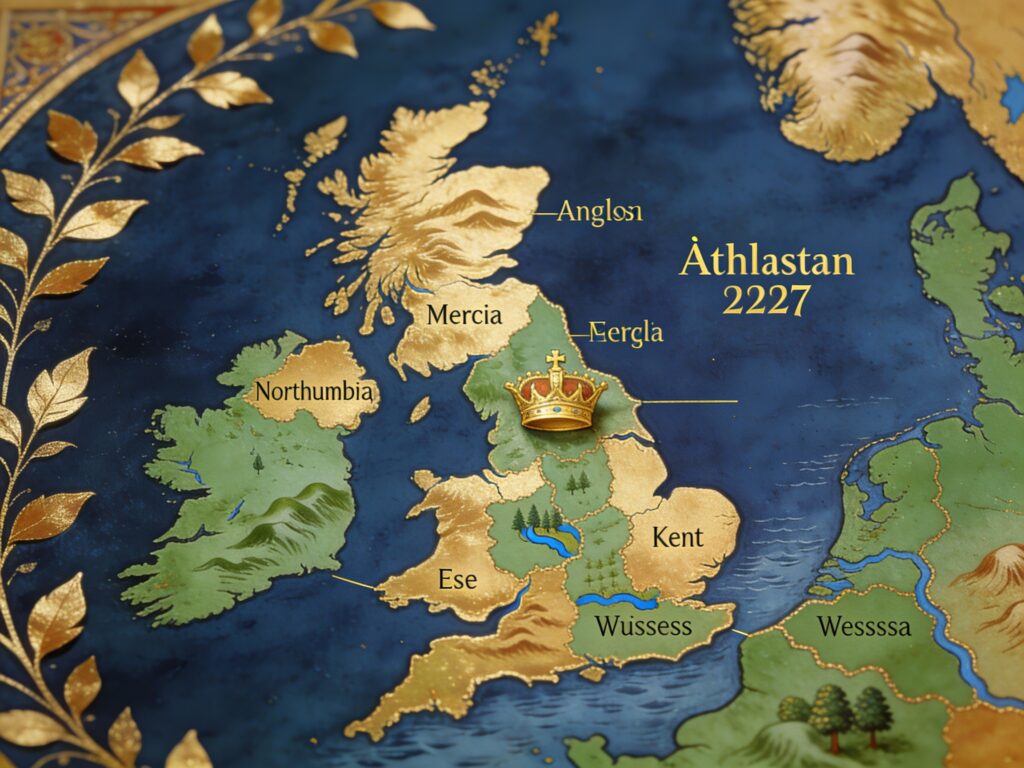
The real breakthrough came with Edward’s grandson, Æthelstan. In 927, Æthelstan became king, and by 930 he had consolidated control over all the Anglo-Saxon and Danish territories. He’s generally recognised as the first true King of all England, not just a powerful king competing with others, but a ruler who controlled the entire landmass from Scotland’s border to the south coast.
The 10th century saw this unified kingdom stabilise. Kings like Edgar the Peaceful (957–975) presided over a period of relative prosperity and cultural flourishing. The church was reformed, monasteries thrived, and a sense of English identity, rather than separate Mercian or Northumbrian or Wessex identities, began to take root.
Danish Rule and the Final Transition (1000–1066)
The peace didn’t last forever. In the late 10th and early 11th centuries, new Viking raids pressed the English kings hard. Kings like Æthelred the Unready (ruling 978–1013) paid Danegeld, massive payments of silver, to buy off the attackers, but the invasions continued.
In 1016, things changed decisively. Cnut, a Danish prince whose father had conquered England, defeated the English king Edmund Ironside and took the throne. For the next 26 years, England was ruled by Danish kings, Cnut and then his sons. Remarkably, this wasn’t a disaster. Cnut was a competent administrator, and England remained relatively stable under Danish rule.
In 1042, the Anglo-Saxon line was restored under Edward the Confessor, a mild-mannered king more interested in religion than politics. When Edward died without an heir in 1066, Norman duke William claimed the throne, defeated Harold Godwinson at the Battle of Hastings, and became king.
With William’s victory, the Anglo-Saxon era formally ended. The language, culture, and structure of England would be transformed by Norman and French influences. The unification that had taken centuries to achieve, seven kingdoms becoming one, was complete, but it was now to be ruled by French-speaking Normans rather than Anglo-Saxon kings.
Why These Periods Matter
The six and a half centuries of Anglo-Saxon rule weren’t just a series of dates and battles. During this time, England developed the institutions, the sense of shared identity, and the legal traditions that would define it for centuries to come. The conversion to Christianity brought learning and monasticism. The Viking wars tested and refined Anglo-Saxon society. The unification under Wessex showed that political consolidation was possible. And the fact that even Danish rule didn’t shatter the kingdom showed how strong that unified English identity had become.
For anyone interested in how nations form, how cultures survive threats, and how disparate groups can come to see themselves as one people, the Anglo-Saxon period offers a compelling case study.
Citations and Sources:
Wikipedia, History of Anglo-Saxon England
EBSCO Research Starters, History of Anglo-Saxon England
Britannica, Anglo-Saxon
Timeline of Anglo-Saxon England, CSUN
Discover Britain, Anglo-Saxon History Timeline
Historic UK, The Anglo-Saxon Kingdoms of the Dark Ages
Britannica, Anglo-Saxon England
Historic UK, The Anglo-Saxon Chronicle
History Guild, The Development of England